From legacy to AI-driven workflows: preparing your team for the future
Manual, sequential workflows still run a surprising number of mid-sized businesses. Tasks follow fixed steps. People wait for approvals. Information gets re-keyed from one system to another. These legacy processes were built for a world that moved slower, and they show it. Repeated handovers, duplicated effort, and slow sign-offs compound quietly until they become the reason a team can't keep pace with what the business actually needs.
This piece explains what workflow management looks like when it works well, where legacy systems fall short, and why AI-driven workflows matter for what comes next.
Workflow management refers to structuring and automating the steps needed to complete a task. Legacy systems depend on manual input and fixed sequences. Modern and AI-driven workflows streamline tasks, increase transparency, and make it easier to adapt to change. This article shows UK business leaders how to move from outdated processes to flexible, people-centred systems.
What is workflow management?
Workflow management is the discipline of defining, automating, and managing the steps that make up a piece of work. A workflow management system provides the structure to design and execute business processes by coordinating tasks and routing information between people and systems. This is different from broader business process management. Workflow management focuses on the specific steps within a task, not the end-to-end process itself.
At its simplest, a workflow has inputs (documents, data, or approvals), transformations (actions taken by people or systems), and outputs (completed tasks or decisions). When you document each step, the ability to get work done stops sitting with one person and becomes something any team member can learn and repeat. That consistency leads to better handovers, fewer errors, and a real foundation for continuous improvement.

The hidden costs of legacy workflows
Legacy workflows depend on static forms and manual approvals. Every time someone waits for an email response or re-enters data that already exists somewhere else, work slows down. These systems lack integration and automation, so information lives in separate silos that nobody connects.
Mid-sized firms often believe their processes are simple enough to manage manually. Sometimes they are, for a while. But cumulative delays add up faster than most leaders expect. Over time, manual workflows limit the ability to scale, create inconsistent experiences for customers, and expose teams to avoidable errors. The friction builds so gradually that it starts to feel normal, which is precisely what makes it dangerous.
Benefits of modern workflow management
Moving to structured, digital workflows brings measurable benefits. Automated routing means work is completed correctly, on time, and according to defined rules. Modern workflow management tools also provide transparency, so managers can see where bottlenecks sit and adjust resources before small delays become large ones. When processes are consistent, staff learn and replicate tasks more easily, which builds operational resilience and supports growth.
UK evidence supports this. The government's SME Digital Adoption Taskforce found that wider use of digital tools such as CRM systems and resource planning software reduces administrative burdens and streamlines processes, with productivity improvements of 7 to 18% per technology adopted. Given that small and medium-sized enterprises make up 99.8% of UK businesses, and that a 1% productivity uplift could add £94 billion annually to GDP, the case for better workflows is strong.
The rise of AI-driven workflows (agentic workflows)
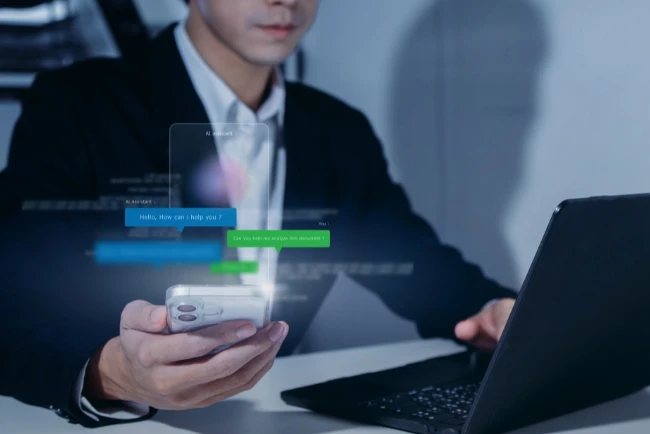
Traditional workflow management software automates predefined steps. A newer class of systems, sometimes called agentic workflows, uses autonomous AI agents to manage and execute tasks. Each agent operates independently and can make real-time decisions based on predefined rules, data inputs, and context. Instead of following a rigid sequence, the workflow can dynamically break down tasks and adapt as conditions change.
Agentic workflows can also enhance modular architectures. By embedding autonomous decision-making within each component, they enable dynamic collaboration, adaptive task management, and better handling of unexpected events. A logistics workflow, for example, might detect delays and automatically re-route deliveries or adjust orders without waiting for someone to notice and intervene.
Research on global virtual teams has shown that coordination mechanisms become harder to maintain as operational complexity grows, particularly across distributed teams. AI-driven workflows address this by reducing the manual coordination burden that causes most handover failures.
Risks and considerations: transparency, data, and ethics
AI-driven workflows offer flexibility, but they raise concerns that leaders should take seriously. Because autonomous agents make decisions, the path of execution can become difficult to follow. The UK Government notes that agentic systems may be less transparent than linear workflows. That opacity can make it harder to audit decisions or explain outcomes to customers and regulators.
Data protection is another critical issue. UK law requires personal data to be used fairly, lawfully, and transparently, for specified purposes, and only to the extent necessary. Sensitive data covering areas such as race, health, and religion receives extra protection. The ICO's guidance on controller-processor contracts makes clear that automated decision-making and profiling are subject to strict rules, and individuals have the right to object. Organisations adopting AI-driven workflows must ensure that data inputs and automated decisions comply with these principles. Failing to do so risks legal sanctions and loss of trust.

Preparing your team for change: practical steps
Transforming workflows is not just about buying software. It requires clear purpose, careful assessment, and ongoing support. The following steps, rooted in Adapt Digital's E.A.A.R methodology, offer a structured way forward.
Establish: Define the workflow's purpose and scope. Identify stakeholders and document how work happens today. Map each input, action, and output. This step alone often reveals friction that has gone unnoticed for years.
Assess: Analyse the mapped workflow to find bottlenecks, duplication, and compliance gaps. Consider where legacy systems slow things down. Check whether personal data is processed fairly and legally. ISO 37500, the international standard for outsourcing governance, provides a useful framework for thinking about how processes flow across teams and systems.
Address: Design improvements and select appropriate workflow management software or tools. Look for features that allow you to map and customise workflows, automate notifications, integrate with existing systems, and measure performance. Train staff on the new process and provide clear documentation. The NIST Cybersecurity Framework 2.0 offers a structured approach for managing security risks during this transition, particularly when workflows involve sensitive data or third-party integrations.
Review: Monitor performance regularly. Set metrics such as cycle time and error rate, then gather feedback. Use insights to refine the workflow and adapt as needs change. ISO 31000, the international standard for risk management, provides a practical loop for identifying, evaluating, and treating risks on an ongoing basis.
Throughout this process, remember that adoption is a people issue. Teams need time to adjust, and leaders should create space for feedback. Starting small with a pilot process can build momentum and confidence before a wider rollout.
Choosing and implementing workflow management software
Selecting workflow management tools is a key step in any upgrade. Look for solutions that let you map and define workflows, create custom steps, automate notifications, and integrate with existing systems. Good tools provide dashboards or reports to measure performance and help you spot bottlenecks before they become serious.
When evaluating AI-enabled solutions, ask vendors how their systems make decisions and whether you can audit those decisions. The AICPA's SOC 2 framework provides a useful benchmark for assessing whether a vendor's controls around security, availability, and processing integrity meet the standard your organisation requires. Similarly, ISO/IEC 27001 certification signals that a vendor operates a structured information security management system, though the scope of any certification should be checked carefully.
Ensure the product supports compliance with data protection requirements, including controls for automated decision-making and profiling. Check that the vendor's data handling practices align with UK regulations, particularly around GDPR requirements for controller-processor agreements.
Implementation should include training, documentation, and a clear change management plan. Mid-sized businesses often struggle with high switching costs and lack the confidence to commit. To manage this, phase your deployments and provide hands-on support. Budget for integration work and test the system thoroughly before going live. CISA's Cross-Sector Cybersecurity Performance Goals offer a practical baseline for the security actions any organisation should consider when onboarding new technology, particularly in regulated sectors.
Synchronous communication declines as teams become more distributed, which makes structured workflows and clear documentation even more critical for organisations with remote or hybrid teams. The UK's Office for National Statistics reports that 28% of workers in Great Britain were hybrid workers between January and March 2025, reinforcing why workflow clarity matters for how modern teams actually operate.
Adopting technology without leaving people behind
Workflow management is not just a technology upgrade. It is a way to build clarity and reduce friction across your organisation. Legacy workflows slow teams down, but rushing into AI-driven solutions without proper thought introduces new risks.
Start with clear, people-centred processes. Then add technology that fits those workflows. Even the process of mapping and analysing how work actually moves through your teams can reveal inefficiencies and spark improvements that pay for themselves immediately.
As workflows become more digital and more distributed, security governance needs to scale with them. This is not a reason to avoid modernisation. It is a reason to do it properly, with controls built in from the start rather than bolted on after something goes wrong.
With the right approach, UK SMEs can modernise their operations, meet compliance obligations, and give their teams the space to focus on work that actually matters.
To discuss how Adapt Digital can help you map your workflows and adopt tools that fit your team, don’t hesitate to get in touch.